

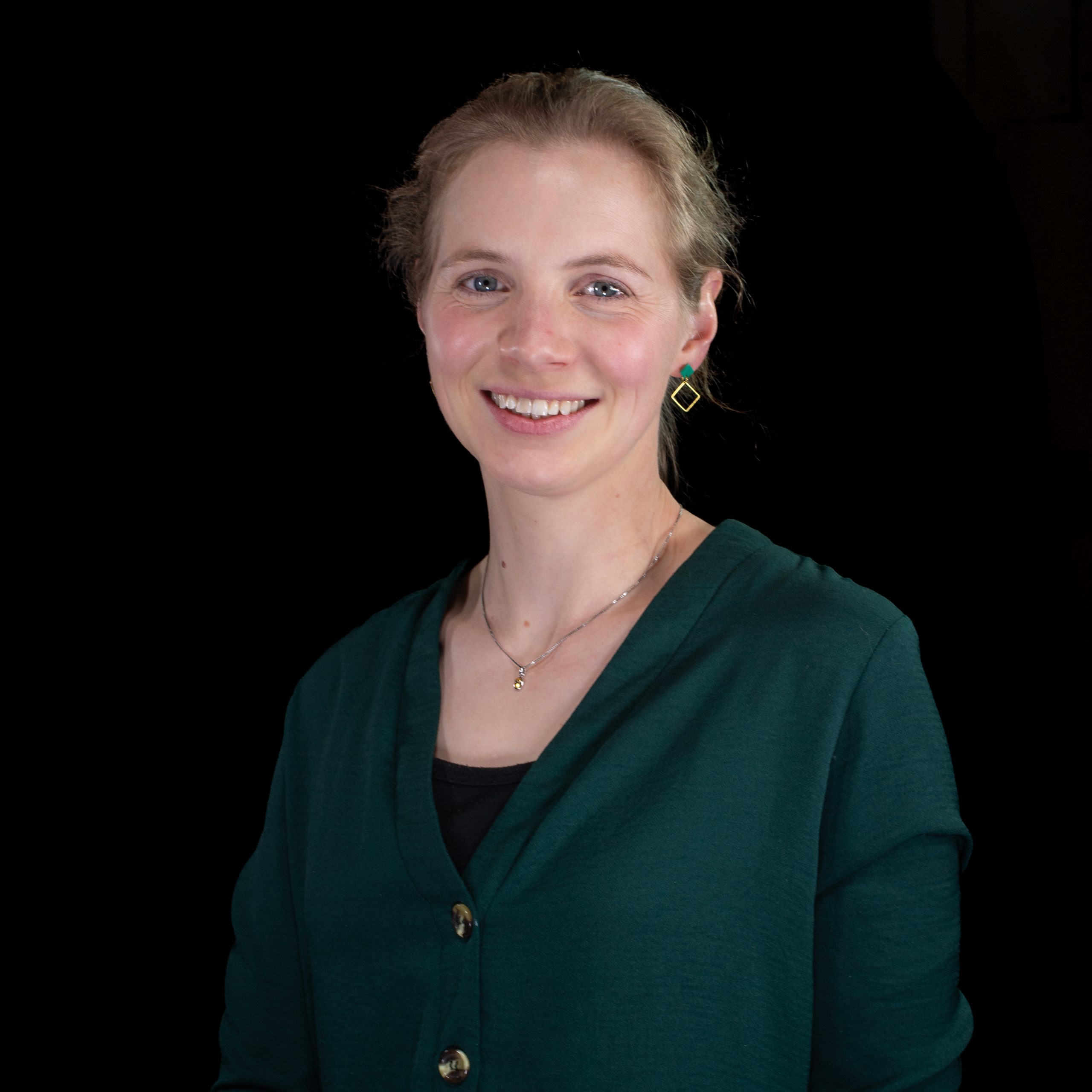
“Nature is amazing, basically”, says Jo Sadler, senior lecturer in biotechnology at the Institute of quantitative biology, biochemistry and biotechnology in the School of Biological Sciences at the University of Edinburgh, and Head of a laboratory focussed on biotechnology research for plastic sustainability.
Sadler, who was encouraged at school to follow a medical career, was drawn to a first degree in Chemistry instead, before being introduced to biocatalysts during her PhD, when she became part of a synthetic biochemistry team. “I thought, oh my goodness, I’ve been doing chemistry all these years, and enzymes are so much better than we are at chemistry”, she recalls. “I loved it. And I think from then, just realized that I needed to learn more biology, because I wanted to upskill in that field.”
In a number of other ways too, her early experiences during these years would become foundational to her current work, as well as to her scientific outlook. A key experience from her first degree in chemistry had already solidified in her a strong motivation to pursue science with tangible impacts. “My year in industry was probably the most important year of the whole degree”, she recalls. “I went to AstraZeneca to work in the process chemistry department. And suddenly, chemistry just felt like a real subject that was happening in real life. It felt very exciting. I realized that these incremental improvements you make in a research lab can have really huge ramifications at scale.” When Sadler returned to complete her masters research “in a carbohydrate chemistry group, which had something of a biological angle”, she thought about her studies completely differently. “I was so motivated to do work that would have a very direct, real world application”, she says, “and sit at that interface between academia and industry.”
Falling under three themes, her current work still honours this ambition. The first looks into designing novel bioprocesses to make plastic precursors sustainably. In the second, her lab explores how enzymes can be made to interact with plastics more efficiently: “we have ways to stick microbial cells onto the surface of plastic”, she explains, “and we can secrete enzymes to their surface—it’s basically getting cells to interact very closely. And that has exciting applications in microplastics capture”. The third strand of Sadler’s work is developing upcycling routes for degraded plastics, because, as she says, “we don’t necessarily just want to make more plastic. At some point, we need to break the cycle, and we need to do something else with it…if we can efficiently degrade plastic, which many other people in the field are doing brilliantly, what do we then do with that carbon?”
Sadler came to this work after postdoctoral research at the Manchester Institute of biotechnology at the University of Manchester, and then at the University of St Andrews, before the award of a BBSRC Discovery Fellowship, in 2018, brought her to the University of Edinburgh. The research she had proposed for that Fellowship came out of an intention to “bring together everything that I’d done, and what was going to motivate me on this path”, as well as spotting “a huge gap—people were doing research on plastic degrading enzymes”, she noted, “but this idea of upcycling plastic into a useful chemical was virtually unknown.”
Taking PET plastics, widely used in food packaging, as an example, Sadler says, “if you look at the structure of that, we knew enzymes could break it down. I just thought, well, what could you do with those products? Could you use those for something useful? I still remember the first time I wrote out the pathway to vanillin on a piece of paper, at seven o’clock, one evening in Manchester.”
Since then, Sadler says, “the field has absolutely blossomed. And it’s huge.” It was around the time David Attenborough’s Blue Planet series was broadcast, and, she says, “that really put the plastic waste crisis in the public eye. At that point, the whole plastic sustainability issue just exploded, and everybody was suddenly hyper aware of the problem. Big labs started working on it—and they can move very quickly. They started to publish really high-profile papers on plastic degradation and plastic upcycling. And that really catalyzed the field.”
Another knock-on effect was that more research funding was becoming available, including the UK Research and Innovation (UKRI) Engineering Biology Mission Hubs awards, announced in December 2023, of which P3EB was one beneficiary. Sadler became a key part of the P3EB Mission Hub along with colleague and mentor Prof Stephen Wallace, also at the University of Edinburgh. Like Wallace’s recent work on utilising bacteria to turn plastic waste into painkillers, Sadler is working on making zingerone (the chemical responsible for ginger’s characteristic flavour and pungency) from modified terephthalic acid, a monomer from PET/ polyester. In addition, her recent discovery of a new enzyme hopes “to open the doors to a different area of the chemical space from plastic, which is quite exciting. There’s two ways to do this kind of chemistry”, she explains. “You can either take, say, terephthalic acid and modify it to make something new, like we are doing to make zingerone, or you can take that terephthalic acid and direct it into the central metabolism of cells, and then program the cells to make anything.”
Sadler is also doing significant work on PLA. “PLA is a hugely growing market, and companies are using it extensively. It was marketed as biodegradable”, she says. “But it’s not. If you put out of compost heap, it will still be there five years later.” Sadler’s lab is now “developing routes to degrade and upcycle PLA using single pot systems to try and make PLA a truly sustainable circular material.”
For Sadler, “what’s really exciting is the prospect of making these processes demonstrable at scale.” The reason, she explains, is that “we know we can do these things at small scale. We know that we can. There are loads of pathways now that show upcycling of waste into useful chemicals. The challenge is, can we take that technology and translate it into impact and actually change the way that something happens at scale? Can we find a way to make it desirable, way to make chemicals that is going to compete or complement existing, scalable technologies?”
Through all of her work, Sadler remains application driven. “I want to see these technologies actually do something, change the way that things are done. We can publish papers. We can keep publishing papers forever, and that’s great, and it’s interesting. But for me, that’s not quite enough. I think we need to go further and work directly with industry to actually change processes, and that’s happening now through the P3EB Hub. And it might also happen through formation of start-ups, spin outs and other kind of commercialization activities. But I think that’s now the challenge. That will take this field to the next level.”